


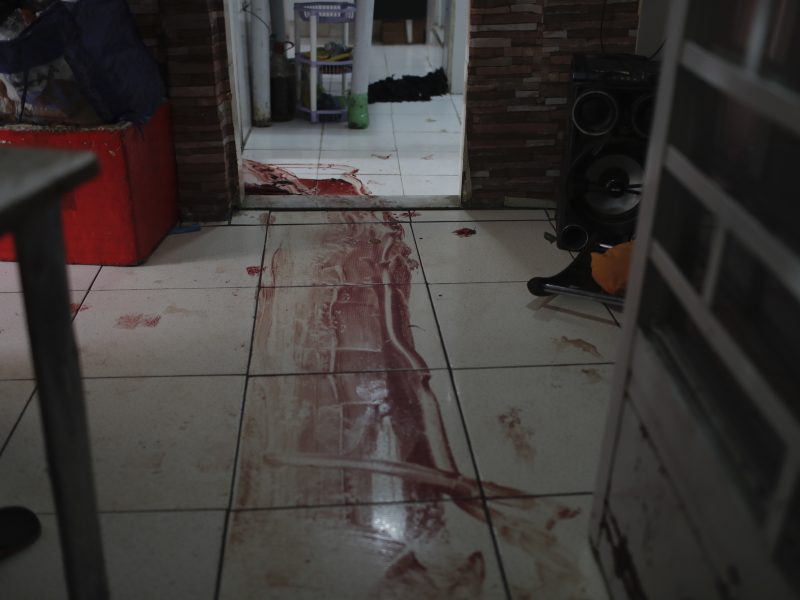
RIO DE JANEIRO (CN) - On the same day Brazil's Supreme Court was set to resume a landmark case on police violence, a raid by heavily armed police shut down a favela in Rio de Janeiro. Armored vehicles rolled into Vila Kennedy Thursday morning. Residents reported gunfire, and at least 15 schools and a health clinic closed. The operation targeted supposed members of a criminal faction linked to the killing of a prison officer.
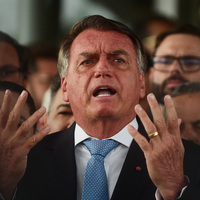
The Supreme Court session on the initiative to restrain law enforcement tactics was postponed to April 3, so justices could focus on the trial that ended with former President Jair Bolsonaro indicted for inciting a coup attempt.
Filed in 2019 by the Brazilian Socialist Party, the Action for Breach of a Fundamental Precept 635, or ADPF 635 - commonly known as the "ADPF of the Favelas" - gained national attention in 2020. That's when Edson Fachin, a Supreme Court justice and the case's rapporteur, found that police operations in the impoverished neighborhoods on Rio's periphery should only take place under "absolutely exceptional circumstances" during the Covid-19 pandemic. The full court later agreed, with one justice dissenting.
The injunction curbed many armed actions in the city's outskirts and sparked a broader debate about the constitutional limits of state use of force.
Yet police raids remain routine in Rio de Janeiro. According to the state public prosecutor's office, between June 2020 and January 2025, the state civil and military police reported 4,600 operations in low-income communities across the state.
In 2024 and the first month of 2025 alone, there were 1,354 such raids, resulting in at least 236 deaths and 177 firearm injuries, according to a civil society monitoring task force. Police lethality in the state is more than twice the national average, according to the Brazilian Public Security Forum.
"ADPF 635 is basically saying that the Constitution applies to poor people too," said Mauricio Dieter, professor of criminology and criminal law at the University of Sao Paulo.
He argues that the court's intervention should not be seen as exceptional, but rather as a baseline expectation in a constitutional democracy. "The Supreme Court is doing what any responsible government should do: prioritize well-planned, intelligence-based operations - not commando-style assaults," he said.
Justice Fachin cast his vote in February, siding with the plaintiffs and declaring that Brazil faces a "state of unconstitutional affairs" in its public security policy. In his view, data from recent years supports the effectiveness of court-imposed limits.
In 2023, 871 people were killed by police in Rio - the lowest figure since 2015 and nearly 1,000 fewer than in 2019, when 1,814 such deaths were recorded, according to the state's Institute for Public Security.
Fachin also proposed a set of structural reforms aimed at reducing police lethality and strengthening oversight: suspending officers involved in fatal operations, requiring ambulances on site, mandating the use of body cameras and establishing external monitoring mechanisms.
Unlike the U.S. Supreme Court, where justices deliberate in private and release decisions all at once, Brazil's Supreme Court votes in stages, often over multiple sessions. Justices cast their votes individually and publicly, which means rulings can unfold over weeks or even months before a final majority is reached.
As other justices signal diverging views, legal scholars, public officials and civil society remain divided - some see the case as an obstacle to law enforcement, others as a necessary step to protect constitutional rights in historically marginalized areas.
The case was conceived by constitutional law scholar Daniel Sarmento, a professor at Rio de Janeiro State University, and drafted by his former student, attorney Joao Gabriel Madeira Pontes.
"The ADPF of the Favelas arose from the recognition that public security in Rio was unusually violent," Pontes said. He noted that the case was filed in November 2019 - months before the pandemic - despite public perception that it was a Covid-era measure.
The state government - which oversees both the military police, responsible for patrol and public order, and civil police, responsible for criminal investigations - has opposed the ADPF, arguing that it undermines police effectiveness and allows criminal groups to grow. According to the Civil Police, 249 criminal leaders from other states are hiding in Rio's favelas.
Victor Cesar dos Santos, the state public security secretary, said Rio has faced a state of exception for years. He argued that the Supreme Court's ruling created legal uncertainty for frontline officers, weakened efforts to dismantle organized crime and harmed residents.
"Barricades in gang-controlled communities have increased significantly since the ADPF. It's a symbol of curtailed freedom of movement, where drug traffickers or militiamen decide who gets to pass, and when," he said.
According to Fabio Ramazzini Bechara, a law professor at Mackenzie Presbyterian University and a prosecutor for the state of Sao Paulo, the ADPF does not prevent police from entering favelas, but it does mean they require stronger legal justification.
"At no point does it create a physical no-go zone," he said. "What the case requires is better intelligence and procedural rigor before conducting intrusive operations."
In a recent filing at the Supreme Court, Rio's public prosecutor's office noted that most police killings in Rio take place during preplanned operations, not reactive confrontations. Prosecutors also criticized the absence of basic governance mechanisms such as planning protocols, transparency and performance evaluation.
Activist and researcher Fransergio Goulart, coordinator of the Right to Memory and Racial Justice Initiative, called the case a legal, political and social turning point.
He emphasized the role of grassroots groups and mothers of victims acting as amici curiae, pushing for a shift in Brazil's public security paradigm. "Favelas aren't violent - they're violated," he said. "The ADPF is a way to confront the violence that the state itself has perpetuated."
Some justices - such as Alexandre de Moraes - may support a narrower interpretation, one that allows for greater discretionary use of force by police.
For Leonardo Carvalho, a researcher at the Brazilian Public Security Forum, the central issue is that the ADPF was never designed to replace a public security policy.
"It's clear today that the state of Rio de Janeiro can't solve its public safety crisis alone," he said. "What the court is doing is responding to a fundamentally unconstitutional situation - a kind of emergency room for a chronic issue."
Thaise Albino da Silva, who studied the militarization of urban space in her graduate work at the Federal University of Rio de Janeiro, said the backlash against the ADPF reflects political rhetoric that appeals to a public desire for retribution. "It's a narrative built on blood," she said. "No one wants to live in a violent city - but violence shouldn't be met with more violence."
According to Dieter, the case sets a national benchmark for police conduct. "That's why the governments that promote a tough-on-crime image hate it - it forces them to work smarter," he said.
Even Santos, the state's security secretary, has acknowledged the need for improved criminal intelligence and financial investigations. "The American phrase 'follow the money' is the way forward. That's how they buy rifles - and rifles are how they expand territorial control," the secretary said.
For Pontes, the lawyer who co-drafted the lawsuit, the ruling is just the beginning. "My hope is that the court follows Fachin's vote. But the real challenge will be making sure it's enforced," he said.
Pending issues include the adoption of independent forensic investigations in police killings, the mandatory removal of officers with violent records and the establishment of measurable targets for reducing police lethality. The court may also decide whether to create a permanent oversight committee with representatives from civil society, research groups and the National Justice Council.
Source: Courthouse News Service