

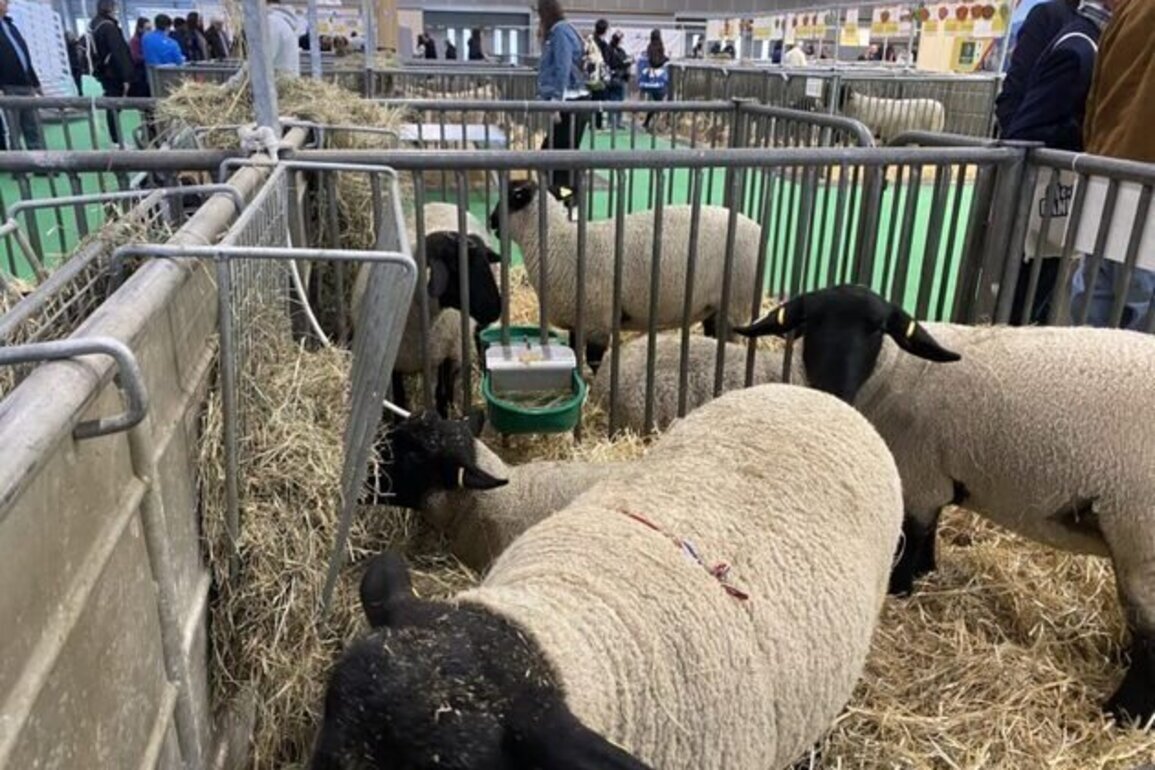
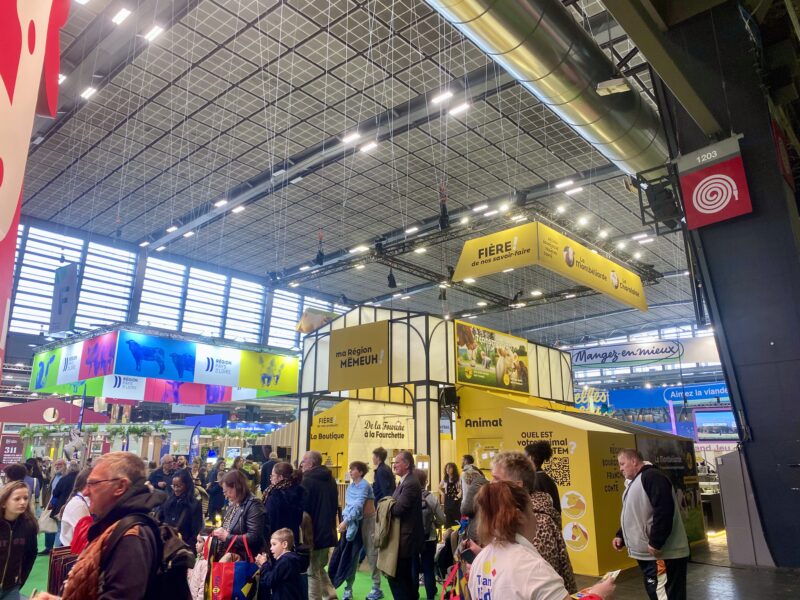
PARIS (CN) - Inside a 40-acre exhibition hall on the outskirts of Paris Friday, bright neon billboards cast a glow on sheep and goats snacking on hay. Piglets played in an arena as signs encouraged people to eat meat more responsibly. Agricultural workers stood in booths, drinking beer and chatting with passersby.
In the French cultural imagination, the annual Salon de l'Agriculture fair is recognized as both a mecca for day-drinking and a hotbed for politics. Hundreds of thousands of people visit the salon each year, and on Friday at roughly 1 p.m., it seemed like every adult had either a drink or child in hand. Throughout the week, almost every leading French politician made an appearance after President Emmanuel Macron inaugurated the event on Saturday.
But Friday, emotions were running high. In the morning, EU Commission President Ursula von der Leyen abruptly announced the provisional implementation of the EU-Mercosur trade agreement, which has sparked widespread controversy across the continent and is still pending EU parliamentary approval.
Macron called the move an "unpleasant surprise" for the country, and denounced the "poor" maneuver of proceeding without a vote.
Farmers are at the heart of the controversy. Under the deal signed Jan. 17 after more than 25 years of negotiations, Argentina, Brazil, Paraguay and Uruguay could export an additional 99,000 tons of beef to the EU alongside other food products. French farmers are held to very tight regulatory standards with strict production limits; it's unlikely the imported meat will be tied to the same rules.
Damien Cazaex works on a small, family-operated livestock farm. He is "completely against" the Mercosur agreement for multiple reasons. ,He said he's appalled that animals are treated with hormones and rushed through the fattening process so consumers abroad can eat cheap meat. Then, he described the "massively high standards" small-scale farmers must meet.
"With the arrival of Mercosur, we have meat, or food products, arriving that are produced for next to nothing and for these guys, it's pure profit," he said. "That's why we're completely against it, especially regarding health, animal welfare, and consumer welfare."
He added that the playing field is far from level.
"I think we're doing things properly, we respect all the standards, we have extensive monitoring, and when we see what's happening ... we don't agree with that, and we'll fight this to the end," he said.
A few booths down, Eric Lagarde, who raises Pays d'Oc sheep, echoed the same concerns. He worries the deal will drive down the price of French lamb to the point he can no longer afford to maintain production standards, which he doesn't want to disappear.
"People only talk about price," he explained. "But these products from thousands of miles away, they travel under who-knows-what conditions, produced under who-knows-what conditions - so there are plenty of unknowns, and we only look at the price."
Chloe, a dairy farmer who asked to go by her first name, felt similarly. She contemplated the deal while leaning on a glass counter of cheeses, cream and butter.
"In France, we have standards imposed on us, and we're very regulated and controlled in that regard," she explained. "And it's just not right that we can import things that we don't necessarily have the right to produce in France."
Some agriculture workers were more indifferent to the deal. Stephanie Depuydt was manning the booth for a meat quality-control association. She said she will continue to buy French meat no matter what, since she knows the quality that French farmers produce. If others prioritize price, she said, that's on them.
Christophe Eon, a breeding specialist, was scrolling on his phone near a livestock booth. In his view, the media has been blowing up the whole Mercosur affair, and French people simply have to commit to buying French meat, regardless of the price.
"We need to stop just looking at our wallets; we need to buy French and promote the products that the French make," he said, shrugging. "They say it's good, but more expensive - well, obviously!"
Throughout the afternoon, experts delivered speeches about milk production while children and grown-ups poked fingers into sheep pens. Throughout the week, France's leading politicians - including Marine Le Pen, Jordan Bardella, Raphal Glucksmann and others - filed through crowds to speak with producers.
But producers aren't convinced that their motives go beyond a photo-op.
"When they come to the fair, we hear, 'Oh yes, what you're doing is great, what you're doing is great,'" Lagarde said about the politicians. "These are the same people who vote for laws to bring in meat from abroad, so we need to stop taking people for idiots."
For Chloe, politicians have been making appearances at the fair for a long time but ultimately, actions speak louder than words. She said no matter how many times they say "yes," the fact of the matter is that the Mercosur agreement is signed.
"This week, they all came to stroll around a bit, to wander about, to make themselves look good," she said. "But it doesn't translate into action, it doesn't lead to anything concrete."
Cazaex was equally skeptical. He said politicians are completely "out of touch," and just because they can recognize that a "cow has a head, four legs and horn" doesn't mean they know anything about farming. He's disheartened that Mercosur, which he says is motivated by profit, could wipe out high-quality, family-run production.
"We would still like them to support us at the very least," he said. "But now, we've been forgotten."
Source: Courthouse News Service