

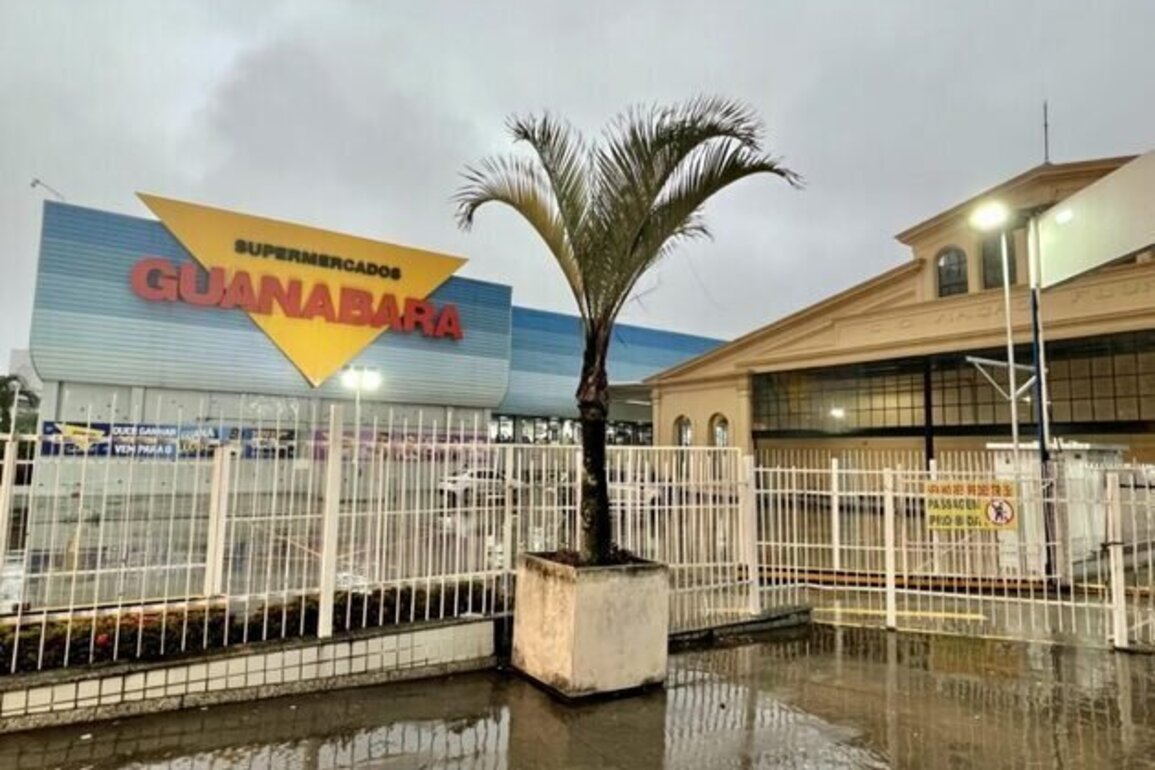
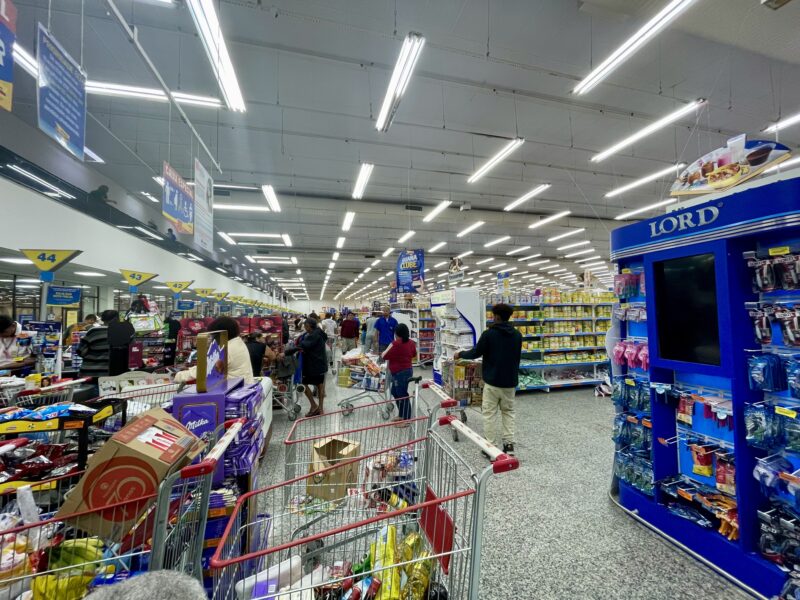
NITEROI (CN) - At the Guanabara supermarket in Niteroi - a city of half a million residents separated from Rio de Janeiro by a bridge - few days are as busy as the sixth day of each month.
That's when the cards of 54,000 residents are topped up with Arariboias, the local social currency used exclusively within the city. Pegged to Brazil's real, the monthly benefit ranges from 308 to 868 units - roughly $60 to $173.
"We have to prepare; otherwise, we run out of stock, especially on basic food items," store manager Leandro dos Santos Malta said. Since the supermarket began accepting the currency in 2022, he estimates sales have risen by 14%.
The supermarket is one of 7,500 of the city's 12,500 businesses in the food, clothing and pharmaceutical sectors that accept the currency, which has moved more than $140 million since its creation, according to municipal data. It also concentrates most of the spending, the city government said.
For residents like Mariane de Oliveira, a 33-year-old mother of three, the sixth day of the month has become synonymous with restocking the pantry. "We check where prices are best, because here in Niteroi, everywhere accepts it," she said.
Oliveira has been receiving the benefit since March 2022, when the city created the Arariboia program to support low-income families during the pandemic. The initiative expanded an existing emergency basic income policy, turning it into a permanent effort to strengthen the local economy.
Created by municipal law in 2021, the Arariboia - named after the Indigenous chief who founded the city - became part of Niteroi's Solidarity Economy and Social Development Program.
"Legislation is the foundation," said Elton Teixeira, Niteroi's secretary of social assistance and solidarity economy. "When we created a law that established the currency, we institutionalized a public policy. To discontinue it, you'd need another law."
Niteroi's experience is part of a broader movement spreading across Brazil. "For the federal government, this is both a tool for local development and a way to boost household income," said Fernando Zamban, partnerships and development director at Brazil's National Secretariat for Solidarity Economy.
According to Zamban, about 180 social currencies have been created nationwide, with at least 160 still active. The first emerged more than two decades ago in Conjunto Palmeiras, a low-income neighborhood in Fortaleza, a city of 2.5 million in northeastern Brazil. Banco Palmas, founded there, became a pioneer in community finance.
Since then, the model has evolved and been adopted by local governments - the first being Marica, a neighboring city of Niteroi, which launched its Mumbuca currency in 2013.
Economist Fabio Waltenberg, from the Federal Fluminense University and coordinator of the team evaluating the Marica program since 2019, said the Mumbuca was designed to keep social benefits circulating locally in a commuter town with little industry and a service-based economy.
"At first, there was skepticism," Waltenberg said. "But within a few years, the goal of boosting local commerce was achieved."
Today, 32,540 families receive around $46 per month in Mumbucas, injecting roughly $3.2 million monthly into the city's economy, according to local data.
"There was a ripple effect from Marica - other municipalities began replicating the model," he said.
Though all programs share the principle of keeping wealth within the community, each city sets its own rules - and social currencies still operate in a legal gray area.
While Brazil's Central Bank holds the monopoly over official currency, Law No. 15,068 of 2024 - which created the National Policy for Solidarity Economy - formally recognized these initiatives as part of Brazil's solidarity economy.
The law sets issuance criteria: The currencies must be electronic, backed by reais, and issued only by organizations registered in the National Registry of Solidarity Economic Enterprises and recognized by the Ministry of Labor.
Individuals can transact up to two minimum wages per month, limiting risks of money laundering or tax evasion.
This framework complements Law No. 12,865 of 2013 - the "Fintech Law" - which established the legal basis for payment institutions and electronic money under Central Bank oversight. That legal structure also paved the way for Brazil's digital real and indirectly defined boundaries for local digital currencies.
Despite those advances, Brazil still lacks a national law specifically regulating social currencies, said Juliana Sena Ikeda, a partner at Campos Thomaz Advogados, a Sao Paulo-based law firm specializing in digital regulation.
Ikeda said the challenge is balancing local autonomy with state oversight. "We need clear rules for supervision, backing and convertibility to build trust," she said. "But we also must avoid excessive compliance barriers that could stifle community-led initiatives."
Two bills now before Congress seek to fill that gap. Bill 4,476 of 2023 proposes a unified regulatory framework for issuing and circulating social currencies, while Bill 227 of 2025 aims to create a national policy encouraging municipalities to implement their own programs.
Felipe Ronco, a financial regulation lawyer and partner at MKR Advogados in Sao Paulo, said the two proposals complement each other - one setting technical and legal standards, the other promoting adoption.
"The real challenge," he said, "is to design a regulatory model that recognizes the social nature of these initiatives without preventing communities from self-organizing according to their local needs."
Still, not every city is ready to implement a social currency. The model depends on an active local economy - with commerce, goods circulation and administrative capacity. In smaller or less dynamic towns, it can lose momentum.
The initiative thrives where there's a structured marketplace but may distort weaker economies, Waltenberg said. In places with few suppliers, it can create a kind of closed market, limiting consumer choice. The effect is less severe where the social currency supplements other income sources, such as Brazil's Bolsa Familia cash transfer or wages in reais.
According to Waltenberg, the success of programs like Marica's and Niteroi's stems from rare conditions in Brazil - strong municipal budgets fueled by oil royalties and enough political autonomy to sustain local income programs.
The recent solidarity economy law also allows Bolsa Familia payments to be made in local currencies - a move meant to help cities without their own system replicate the model, keeping income circulating locally even without municipal funding.
"It's a particular feature of Brazil," Waltenberg said. "Few countries give municipalities as much power as we do."
Teixeira, the Niteroi secretary, acknowledged that oil royalties were key to the currency's success but said political will remains the decisive factor.
He now wants to expand the use of Arariboia beyond social benefits. "Our utopia is that, one day, every resident will have their own account at the Arariboia Bank," he said. "That they'll be able to move money from traditional banks into this system and make it circulate within the city. It's still a utopia - there's a long way to go."
For now, part of that dream already happens on a small scale. Ana Paula Cunha, 41, unemployed since her daughter was born 13 years ago, has been part of the program since its launch. She uses her Arariboias to buy ingredients for cakes she sells in her neighborhood - and the money keeps circulating locally.
Courthouse News reporter Marilia Marasciulo is based in Brazil.

Source: Courthouse News Service