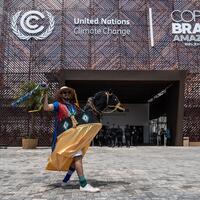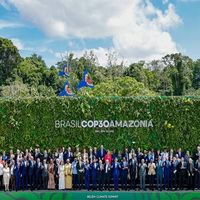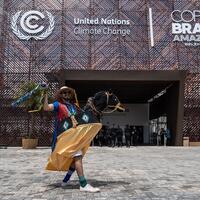


BELEM, Brazil (CN) - Negotiations at the United Nations Climate Change Conference began in Belem, Brazil, after 194 countries approved the official agenda, averting a procedural deadlock that threatened to stall the summit on its first day Monday.
"I want to thank all delegations for the fantastic agreement," said Brazilian diplomat Andre Corra do Lago, president of COP30, during a news briefing. "This understanding allows us to start working intensely right away and to explain to the world why these additional issues really matter."
Negotiations will continue through Nov. 21, covering topics from climate mitigation and adaptation to finance and transparency - all of which must be approved by consensus.
With the agenda cleared, Brazil is now seeking to broaden the talks beyond technical targets, bringing social issues such as hunger, poverty and food security to the center of climate diplomacy.
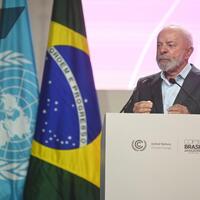
In his opening speech, President Luiz Inacio Lula da Silva urged the international community to "put people at the center of the climate agenda."
"Global warming can push millions of people into hunger and poverty, rolling back decades of progress," he said.
According to Saulo Ceolin, head of the Food and Nutrition Security Division at Brazil's Ministry of Foreign Affairs, topics like food systems and food security rarely appear on the official COP negotiation agenda.
"What Brazil did was to strongly bring these issues into the action agenda, which is everything that happens around the negotiations," Ceolin said. "The goal was to organize these themes and find ways to ensure that previous commitments are actually implemented."
The effort gained momentum with the Belem Declaration on Hunger, Poverty and People-Centered Climate Action, endorsed by 44 countries and the European Union on Friday, days before the conference opened. Ceolin said that number has since risen to 50.
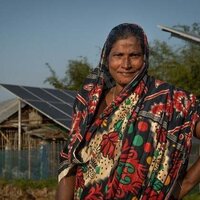
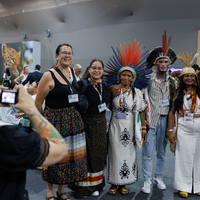
The declaration calls for global climate action that focuses on people and acknowledges climate impacts disproportionately affect poor communities, small farmers and Indigenous peoples.
Ceolin said the Belem Declaration builds on the Global Alliance Against Hunger and Poverty, launched late last year and now with more than 200 members. Both initiatives trace back to a global pact proposed by Lula at COP27 in Egypt and underscore Brazil's push to link social and climate agendas.
"The declaration moves forward by putting human beings at the center of attention," said Wellington Dias, Brazil's minister for Social Development and the Fight Against Hunger, during a COP30 panel that brought together government officials, multilateral banks and regional organizations to discuss implementation plans for the Belem Declaration. "Reducing emissions and adapting to climate impacts is essential, but protecting people's lives, income and living conditions is even more so."
Flavia Reis, environmental law partner at Sao Paulo-based firm FLH Advogados, said the Belem Declaration represents a turning point in how humanity is treated within the climate agenda.
"Because it was human actions that brought us to the current climate crisis, humanity as a whole has often been cast as the villain that must now silently endure the consequences," she said.
For her, the challenge lies in translating this shift in perspective into concrete policies that also address the needs of communities affected by large-scale projects.
Ceolin said the declaration strengthens Brazil's legitimacy to shape the international climate debate. "It reinforces the recognition we already have, but now even more so, to propose ideas in international forums and take part in mechanisms of climate finance - always in connection with social policies," he said.
He noted that many topics that eventually entered the formal negotiation track began in the so-called action agenda, and believes the same could happen now with the emerging social agenda.
Signs of that shift are already visible at COP30: The Green Climate Fund announced plans to expand its portfolio dedicated to adaptation and social protection for vulnerable populations, while the Gates Foundation pledged a $1.4 billion investment to expand access to innovations helping smallholder farmers across sub-Saharan Africa and South Asia adapt to extreme weather.
Courthouse News reporter Marilia Marasciulo is based in Brazil.
Source: Courthouse News Service